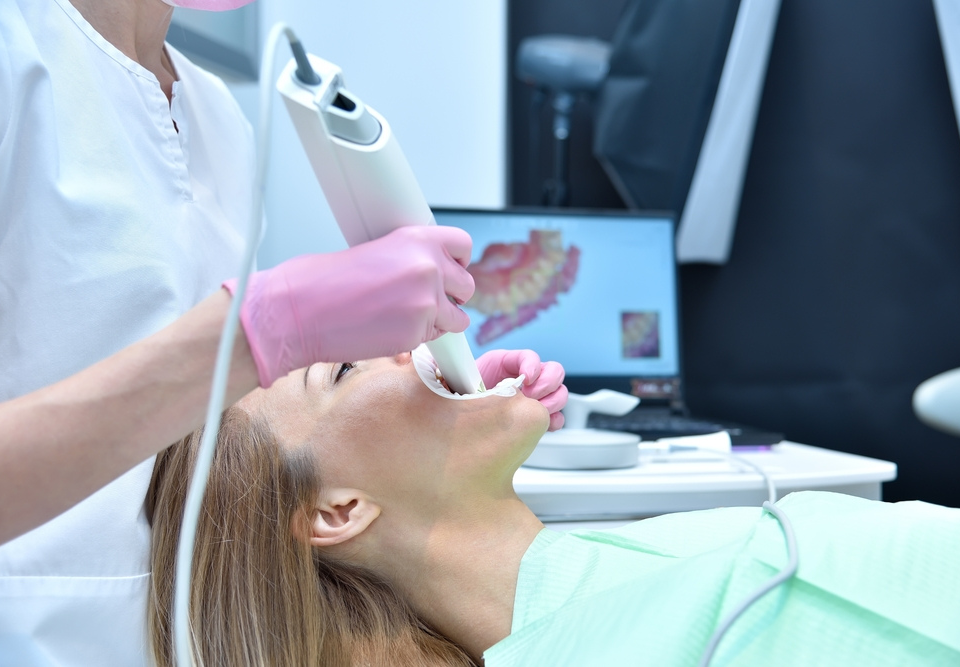
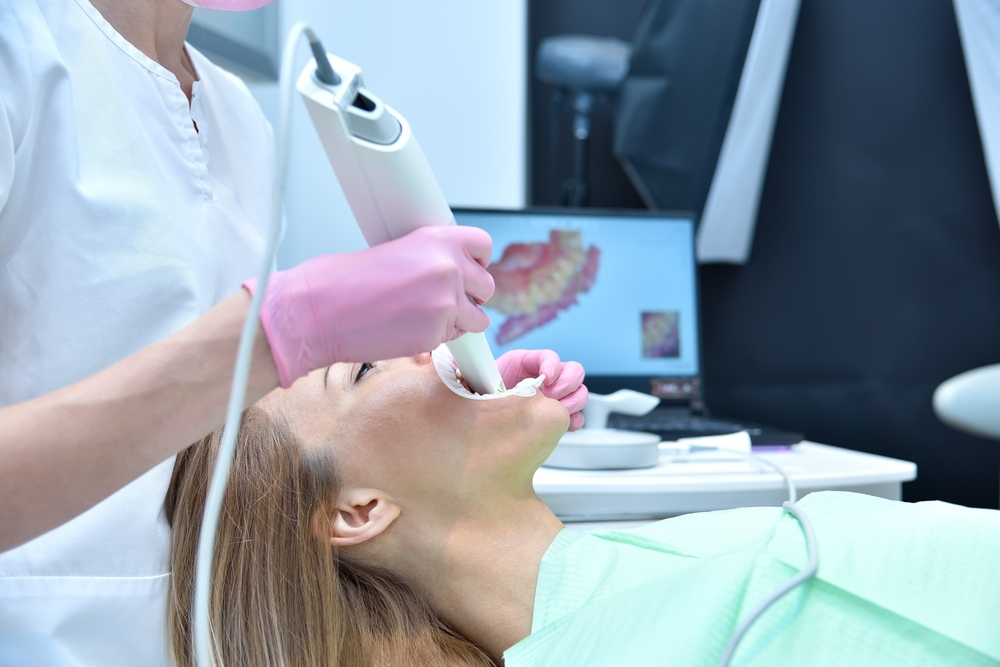
In contemporary dental care, the use of three-dimensional diagnostic imaging – especially Cone Beam Computed Tomography (CBCT) – has become increasingly valuable in achieving precision and confidence in clinical decision-making. Unlike traditional two-dimensional radiographs, CBCT provides a more comprehensive and accurate view of oral and maxillofacial structures.
This expanded imaging capability supports more accurate diagnosis, safer treatment planning, and enhanced communication between clinicians and patients, all while maintaining a non-invasive and targeted low-dose approach.
Conventional 2D dental x-rays (like bitewings or panoramic scans) offer a limited, flat view. While they remain useful for routine screenings, they can sometimes miss anatomical details due to overlapping structures. This is where CBCT or 3D imaging steps in.
Table 1: 2D vs 3D Dental Imaging
| Feature | 2D Imaging (e.g., OPG) | 3D Imaging (CBCT) |
| Dimension | Flat, single plane | Multi-planar 3D view |
| Detail level | Limited | High-resolution |
| Radiation dose | Lower | Slightly higher (targeted) |
| Diagnostic use | General overview | Complex treatment planning |
| Common applications | Routine check-ups | Implants, TMJ, Endodontics |
| Anatomical accuracy | May overlap structures | Minimal distortion |
With CBCT, dental professionals can assess depth, width, and angle – crucial for precision-guided treatment.
3D imaging is not used for every visit. It is reserved for specific clinical situations where a more detailed view is needed to support diagnosis and treatment planning.
Common applications include:
By delivering accurate anatomical views, 3D imaging enhances the ability to identify potential complications or anatomical variances early.
The enhanced clarity and scope of CBCT bring significant advantages:
As with all forms of diagnostic imaging, CBCT must be used responsibly and only when clinically justified.
Safety and risk considerations:
The decision to proceed with CBCT is always made after evaluating its clinical benefit in relation to any potential risks.
The main strength of 3D imaging lies in its ability to facilitate tailored treatment based on each patient’s unique anatomy. Whether planning the placement of a dental implant or mapping the root canals of a molar, having a precise 3D model helps reduce complications and increase clinical predictability.
Table 2: Clinical Use Cases of 3D X-Rays
| Clinical Area | Application |
| Implant Dentistry | Assess bone volume, nerve location |
| Orthodontics | Visualise tooth positioning and spacing |
| Endodontics | Identify root canal morphology and fractures |
| Oral Surgery | Map jaw structures and plan extractions |
| Periodontics | Evaluate bone support around teeth |
| TMJ Analysis | Assess joint space, alignment, abnormalities |
| Sleep Dentistry | Analyse airway passages and sinus volume |
These insights allow for treatment that respects anatomical variations, minimises unnecessary intervention, and enhances predictability.
One of the most significant areas where 3D imaging is transforming care is in dental implantology. Accurate assessment of bone density, nerve proximity, and implant trajectory is crucial for success. A 3D scan supports:
For patients seeking modern, evidence-based dental care, a practice that incorporates 3D imaging can offer significant advantages in diagnosis, risk evaluation, and treatment planning.
Coastal Smiles Dental is committed to providing thorough, patient-centred care supported by the latest in diagnostic technology. Our use of CBCT and digital imaging tools allows us to assess and plan treatments with a high degree of accuracy, particularly for services such as implant assessments, wisdom tooth evaluation, and complex endodontic cases.
We prioritise patient safety by ensuring all imaging is clinically justified, performed under strict protocols, and explained clearly before any procedure. At Coastal Smiles Dental, the focus is on providing detailed, informed care that respects your individual health needs. If you’re looking for professional support guided by precise diagnostics, our team is here to assist you with confidence and clarity.
References
Disclaimer
All dental procedures involve potential risks and benefits. The information provided in this blog is general in nature and should not be taken as medical advice. We recommend that you seek guidance from a suitably qualified health professional before making decisions about your oral health. Where appropriate, you may also wish to consider obtaining a second opinion.
Any images or videos featured are shared with the informed consent of our patients and are intended for educational purposes only. They are not a guarantee of results, as every patient is unique. Treatment outcomes — including recovery, potential complications, and effectiveness — can vary from person to person.
©2026. Coastal Smiles. All Rights Reserved. Design by Generate Your Audience.